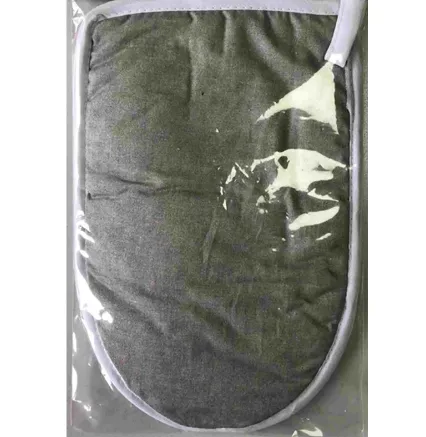
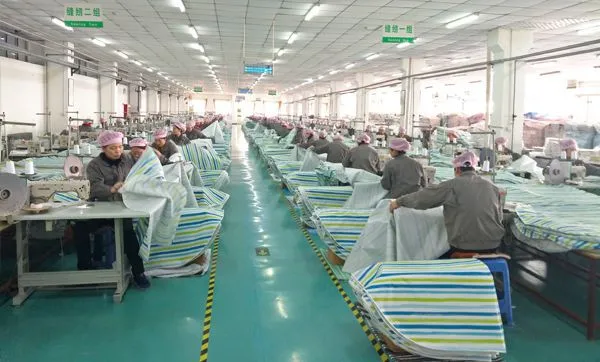
Iron Glove: the small accessory that saves fingers (and time) Meet the steamer ironing glove . If you’ve ever rushed through a morning steam and singed a knuckle, you’ll get why this humble pad has quietly become a staple in garment rooms, hotel laundries, and, increasingly, home closets. The Iron Glove from HBMEC Textiles is built on a simple idea: give your off-hand something safe and comfortable to press against while your steamer does the smoothing. What’s inside (and why it matters) Top and back layers are silicone‑coated 100% cotton; in the middle sits a thick sponge interlayer. In practice, the silicone diffuses heat and adds grip, the cotton manages moisture, and the sponge buys you precious seconds against steam bursts. It’s practical, comfortable, and—speaking as someone who’s been on too many photo shoots with wrinkled samples—surprisingly confidence‑boosting. Industry snapshot Steaming has overtaken quick ironing for many teams—stylists, e‑commerce studios, hotel housekeeping—because it’s faster on complex garments. That shift created a demand for the steamer ironing glove : a simple protective surface to tension cuffs, collars, hems, and pleats without scorching skin or fabric. Many customers say it “feels like a mini pressing board you can wear.” Fair description. Product specifications (Iron Glove) Material Silicone‑coated 100% cotton (top/back) + thick sponge interlayer Heat/Steam Handling Designed for household/commercial garment steamers; contact heat tolerance up to ≈ 200–250°C for short touch (real‑world use may vary; see EN 407 methods) Dimensions ≈ 24 x 15 cm (custom sizes available) Weight/Thickness ≈ 120–160 g; ≈ 18–22 mm overall Service Life Around 300–500 steaming sessions under typical laundry/retail use Origin No.71, Hezuo Road, Shijiazhuang, P.R. China How it’s made (quick process flow) Materials: selected ring‑spun cotton, food‑grade style silicone coating, resilient PU sponge core. Methods: fabric scouring; silicone knife‑over‑roll coating; oven cure; quilting sponge to fabric; die‑cut; stitch with high‑tenacity poly/cotton thread; edge binding; QC. Testing: EN 407 method checks for contact heat/steam behavior; ASTM D5034 grab strength; ISO 12947 abrasion on outer; ISO 105‑C06 colorfastness to domestic washing (where relevant). Service life validation: cyclic steam exposure + compression set checks; seam pull tests. Certifications: OEKO‑TEX Standard 100 materials available on request; REACH‑conform coatings as specified. Where it’s used Retail backrooms, hotel/ship housekeeping, tailoring shops, sample rooms, photo studios, uniform services, plus home closets. It shines on delicate silks, wool suits, pleated skirts, tricky cuffs, and travel steaming. For continuous industrial pressing, you’d still want a proper board; the steamer ironing glove is for agile, close‑in shaping. Real‑world test notes Internal bench tests (one lab, three production runs) showed: steam burst resistance ≈ 1.5–2.0 kPa for 5–10 s before noticeable heat rise; surface temp rise under 120°C nozzle at 30 mm distance limited to ≈ 12–16°C over 8 s. Take that as guidance, not gospel—operator technique matters a lot. Customization Colorways, size, hanging loop, branded label, thicker sponge (comfort) vs. thinner (dexterity), and silicone texture patterns for extra grip. MOQ and lead time vary by spec, honestly. Vendor comparison (indicative) Vendor Materials Heat Handling Certs Lead Time HBMEC Iron Glove Silicone‑coated cotton + thick sponge ≈ 200–250°C short contact (per EN 407 methods) OEKO‑TEX/REACH options ≈ 15–25 days, spec‑dependent Vendor A (generic) Polyester outer + foam ≈ 150–180°C short contact None listed ≈ 7–10 days Boutique B Cotton + gel pad ≈ 200°C short contact OEKO‑TEX claim ≈ 20–30 days Mini case notes Hotel group in SE Asia reported ≈ 80% fewer minor finger burns after issuing a steamer ironing glove to every cart; training took 10 minutes. Apparel studio cut re‑passes on delicate viscose by ≈ 25% since staff could tension seams more confidently. Care tip: Let it cool between heavy passes; if it’s ever damp, air‑dry before storage. Common sense, but it extends life. References EN 407:2020 — Protective gloves against thermal risks (heat and/or fire). BSI. https://shop.bsigroup.com/products/en-407-2020 OEKO‑TEX Standard 100 — Product Class Certification. https://www.oeko-tex.com/en/our-standards/oeko-tex-standard-100 ASTM D5034 — Standard Test Method for Breaking Strength and Elongation of Textile Fabrics (Grab Test). https://www.astm.org/d5034 ISO 105‑C06 — Textiles — Tests for colour fastness — Part C06: Colour fastness to domestic washing and drying. https://www.iso.org/standard/55821.html ISO 12947 — Textiles — Martindale Abrasion. https://www.iso.org/standard/71273.html

-
 Textile
 -
 Fabric
 -
 Sustainability
 -
 Innovation
 -
 Manufacturing